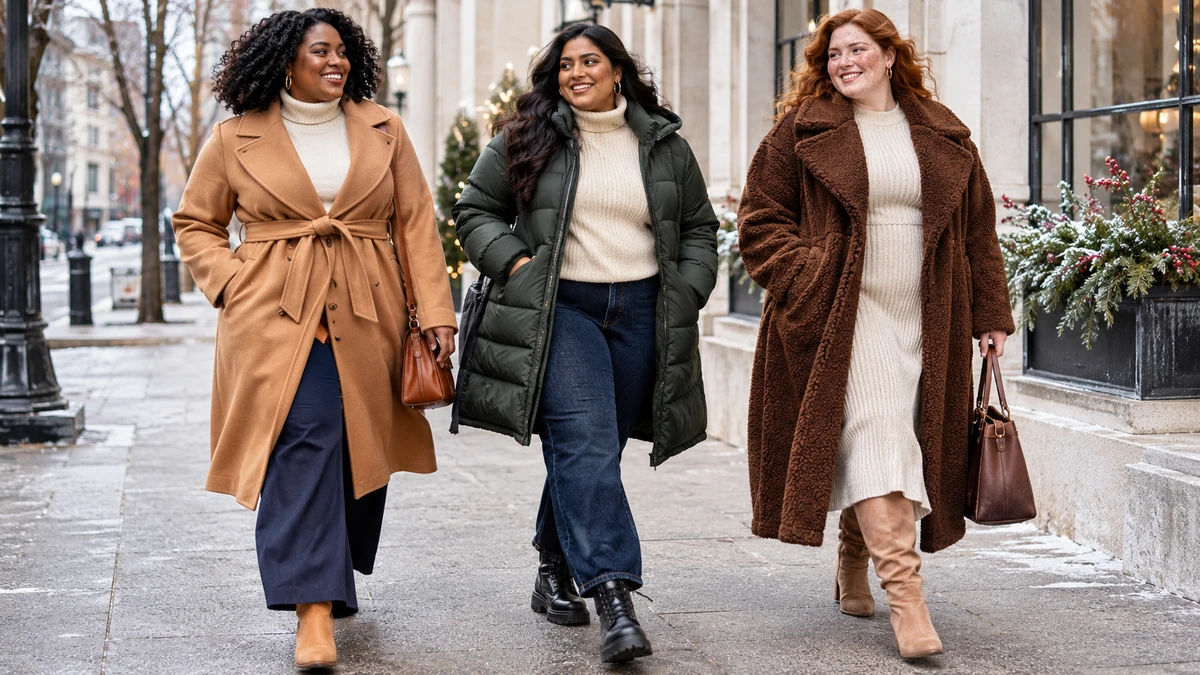
These warm plus-size winter outfits are built for real cold, not just for looking the part. This guide covers which fabrics actually insulate, how to layer without adding bulk, and specific outfit ideas for coats, casual days, and the office. If you are transitioning out of autumn dressing, the plus-size fall outfits with boots guide is a useful starting point before you move into heavier cold-weather pieces.
The Winter Fabrics That Actually Keep You Warm
The warmest winter outfits start with fabric, not silhouette. Choosing the right material at each layer separates an outfit that looks winter-ready from one that genuinely keeps you warm when the temperature drops.
Warmest Natural Fibres for Winter
Merino wool is the most versatile fabric in a winter wardrobe. It is lightweight, moisture-wicking, and provides excellent insulation relative to its weight. The Woolmark Company certifies merino as effective across base-layer and mid-layer applications, performing well even against the skin. It works as a base layer or fine-gauge mid-layer knit and sits close to the body without feeling heavy or restrictive.
Boiled wool is denser and more wind-resistant than a standard knit. The tight felted weave holds warmth without adding bulk at the seams, which makes it ideal for structured mid-layers, blazers, and coats.
Cashmere is softer than merino and works best as a mid-layer, a role where it is unbeaten for comfort. Wear it as a roll-neck or crew-neck under a coat rather than as the outermost layer, where it would wear out faster and lose warmth quickly in wind.
Warmest Synthetics Worth Wearing
Polar fleece has a high warmth-to-weight ratio and performs well as a mid-layer under a wind-resistant outer coat. It is not the most polished fabric for public wear, but paired under a wool overcoat it does a serious thermal job.
Down and Primaloft fill in coats and gilets are best-in-class for insulation. Down compresses well and traps heat effectively. Primaloft is the synthetic equivalent and retains warmth even when wet, which makes it a strong choice in climates with rain or snow.
What to Avoid on Genuinely Cold Days
Chunky acrylic knits look warm but provide only moderate insulation. They work well for indoor dressing or mild temperatures above 10°C (50°F) but are not sufficient on their own in real cold. Open-weave and crochet-style knits have almost no thermal value outdoors, regardless of how heavy they appear.
One practical tip worth carrying through the season: a slim merino base layer worn under a wool blazer will keep you warmer than a thick acrylic jumper worn alone.
How to Layer Winter Outfits Without Feeling Overwhelmed by Fabric
Layering for warmth works on a three-part principle: base, mid-layer, and outer. The key is keeping each layer fitted enough that the previous one stays visible in the silhouette.
Base layer: A fitted thermal or fine-gauge knit that sits against the skin. Merino is the best choice here. It regulates temperature as you move between indoors and outdoors, and it does not add visual bulk because it follows the body’s shape.
Mid-layer: A structured cardigan, ribbed knit, or tailored blazer that holds its shape at the shoulders. A longline ribbed cardigan or wool blazer works better in this position than a bulky fleece zip-up, because it maintains structure at the chest and shoulder without flaring at the hem.
Outer layer: A coat or parka with enough room at the back panel to allow full arm movement without pulling across the upper back. When trying coats, check the back width before the shoulder seam. The shoulder seam should sit at or just past the shoulder point, not drop down the arm.
Proportion matters in layering. A fitted base under a semi-fitted mid-layer keeps the body’s shape readable through the outfit. Piling loose fabric on top of loose fabric adds visual volume without adding practical warmth.
Tonal layering is an editorial technique worth using deliberately. Layering similar tones together, such as a cream thermal base, an oatmeal ribbed mid-layer, and a camel coat, creates visual flow across three layers. The effect is polished rather than bundled.
For readers in sub-zero climates: slim thermal leggings worn under wide-leg trousers are completely hidden and genuinely effective. The wide-leg cut accommodates the base layer without restricting movement or altering the trouser silhouette at all.
Plus-Size Winter Coat Outfits Worth the Investment
A well-chosen coat is the most important purchase in a cold-weather wardrobe. These five outfits cover a range of temperatures and styles, each with specific fabric and structural details.
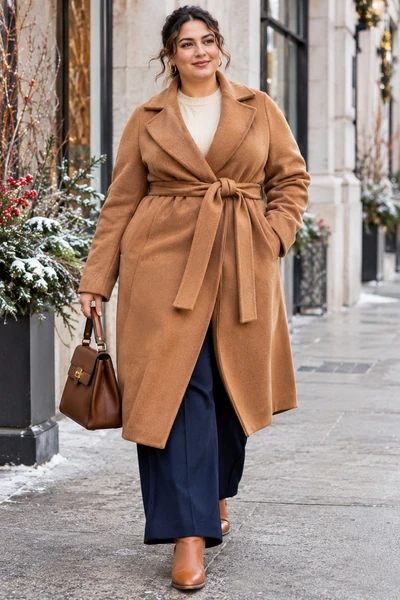
Belted Wool Wrap Coat in Camel or Burgundy
Fabric: Medium-weight wool or wool blend, with a self-tie belt. Worn over a crew-neck cashmere sweater in cream, wide-leg ponte trousers in deep navy, and block-heel leather ankle boots in tan. The self-belt at the front creates a defined panel and stops the coat from opening in the wind. Best for above-freezing days (above 5°C / 40°F).
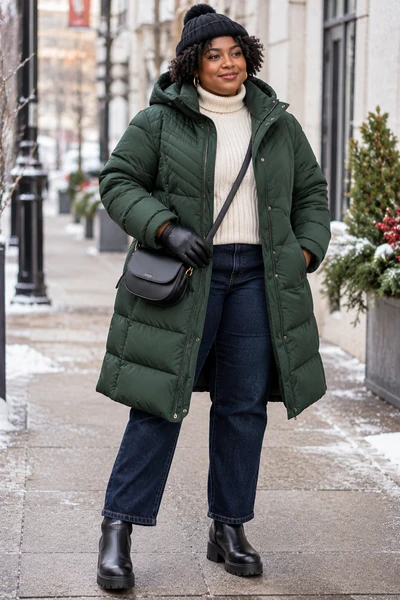
Structured Puffer Coat in Black or Forest Green
Fabric: Down or Primaloft fill with a nylon outer shell. Worn over a ribbed turtleneck in ivory, straight-leg dark-wash denim, and chunky lug-sole ankle boots. Look for vertical quilted baffles rather than horizontal ones: vertical baffles lie closer to the body across the full back panel and suit a wider range of proportions. Best for 0°C to 5°C (32°F to 40°F).
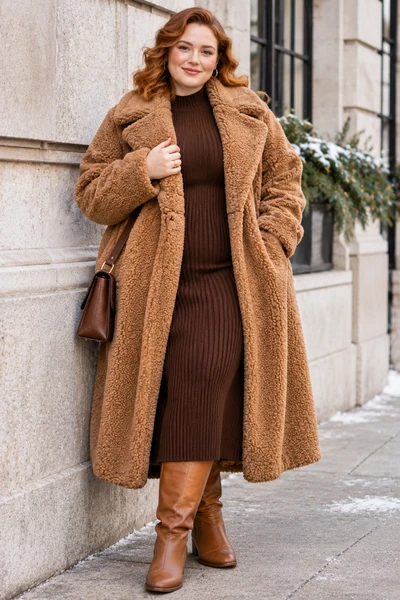
Longline Teddy Coat in Natural or Dark Brown Faux Shearling
Fabric: Faux shearling with a structured outer face and deep pile interior. Worn over a ribbed midi dress in chocolate brown and knee-high flat boots in tan leather. The longline silhouette, hitting at or below the knee, keeps the hips and thighs covered in cold weather and works with the layered ribbed dress underneath.
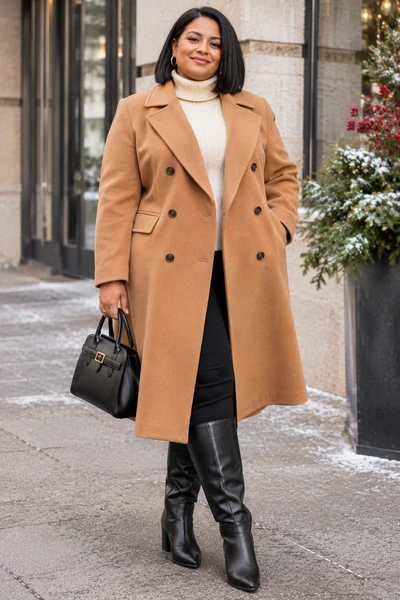
Double-Breasted Camel Coat with Notch Collar
Fabric: Structured heavy wool or wool-cashmere blend. Worn over a thin merino wool turtleneck, slim ponte trousers in black, and leather knee boots in black. The double-breasted front closes higher at the chest than a single-breasted style, improving warmth at the core without extra bulk at the body.
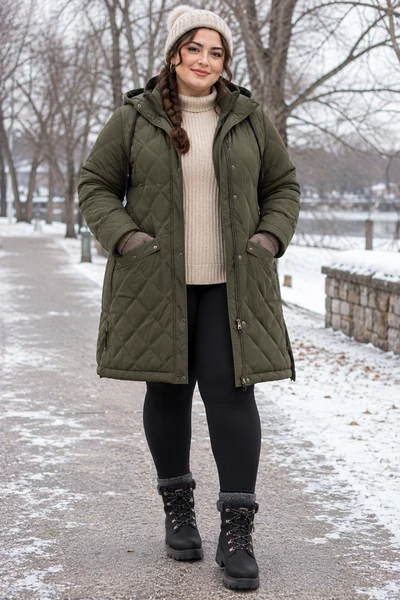
Quilted Thigh-Length Parka with Hood in Olive or Charcoal
Fabric: Quilted polyester fill with a water-resistant, wind-blocking outer shell. Worn with thermal-lined leggings, a chunky ribbed sweater in cream or oatmeal, and tall snow-rated ankle boots. This is the outfit for sub-0°C (below 32°F) conditions and for wet or windy days.
Casual Warm Plus-Size Winter Outfits for Everyday Wear
These outfits work for indoor-to-outdoor days, errands, and mild winter temperatures. Each one is specific enough to shop for or recreate from pieces you may already own.
Oversized Merino Wool Sweater in Oatmeal or Rust
Worn with ponte straight-leg trousers in black and block-heel ankle boots in tan. Tuck the front of the sweater loosely at the waistband to define the midriff. The ponte fabric in the trousers gives structure without restriction and holds its shape through a full day.

Ribbed Turtleneck Bodysuit in Charcoal
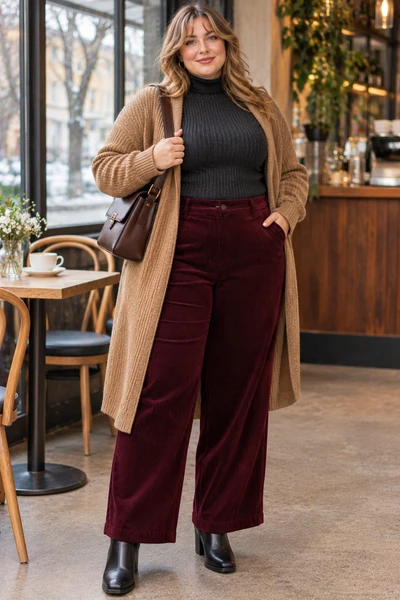
Worn with wide-leg corduroy trousers in deep burgundy, a longline open-front ribbed cardigan in camel, and block-heel chelsea boots in black. A bodysuit eliminates the gap and bunching at the waistband that comes with a tucked top, which matters most when wearing multiple layers under high-rise trousers.
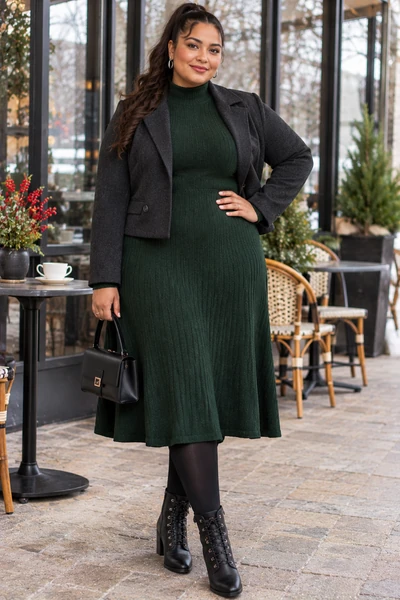
Wool-Blend Knit Midi Dress in Forest Green
Worn over 80-denier opaque tights, with lace-up heeled ankle boots in black. Add a cropped blazer for indoor-to-outdoor transitions. The dress and tights combination is one of the warmest casual options available because there is no waistband gap and the wool fabric drapes freely with movement.
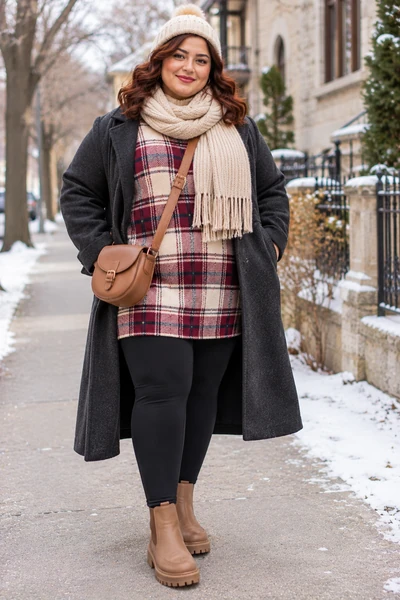
Fleece-Lined Leggings in Black
Worn with a tunic-length sweater in a bold plaid or check print, and lug-sole chelsea boots in tan. Fleece-lined leggings are significantly warmer than standard leggings and less bulky than separate thermal base layers. They are an under-used winter base that makes a real difference in cold weather.
Warm Plus-Size Work Outfits for Winter
Winter workwear has two phases: the commute and the desk. These outfits are warm enough for the journey and polished enough for the office. For more inspiration across all seasons, browse plus-size workwear for outfit ideas by context and dress code.
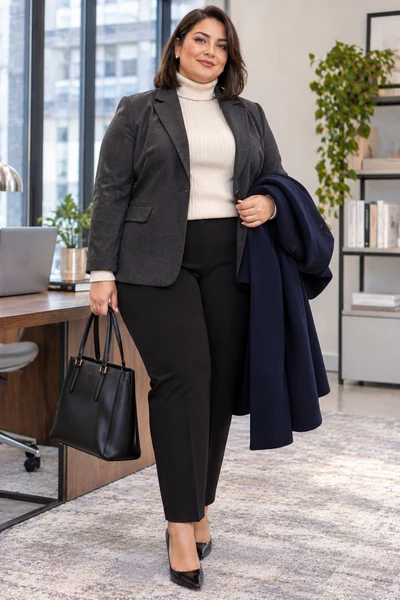
Tailored Wool Blazer in Charcoal over a Cashmere Roll-Neck in Cream
Worn with ponte cigarette trousers in black and leather pointed-toe heels. Commute layer: a longline wool overcoat in charcoal or navy, worn over the blazer. Remove the coat at the office and the tailored blazer, roll-neck, and cigarette trousers read as a complete, polished desk outfit.
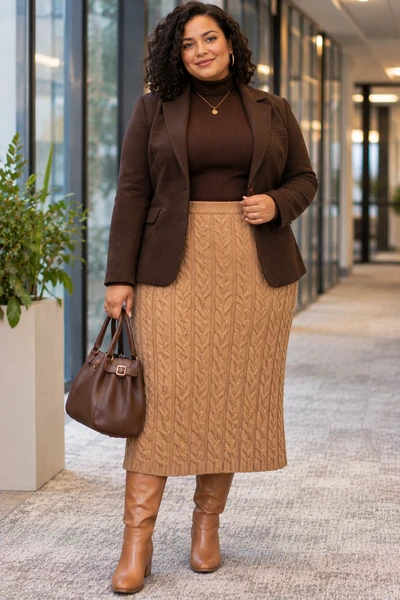
Cable-Knit Midi Skirt in Camel with a Fitted Ribbed Turtleneck in Brown
Worn with knee-high flat leather boots in tan and a fitted wool blazer over the turtleneck. Fabric combination: knit wool skirt, rib-knit turtleneck, wool-blend blazer. The cable-knit skirt provides warmth at the legs while the boots close any cold gap at the ankle during the commute.
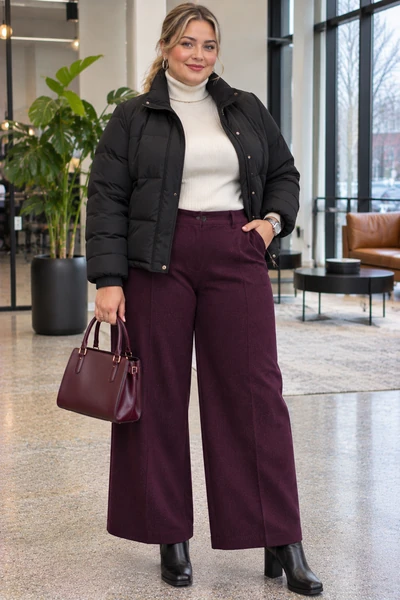
Wide-Leg Wool-Blend Trousers in Deep Plum with a Fitted Turtleneck in Ivory
Add a short structured puffer in black for the commute. The wide-leg cut is loose enough to layer slim thermal leggings underneath without restricting movement or altering the trouser silhouette. Remove the puffer at the office: the turtleneck and wide-leg trousers read as a complete, considered outfit. Footwear: leather block-heel ankle boots in black, or pointed-toe kitten-heel mules in deep burgundy for a tonal finish.
Accessories That Add Real Warmth to Any Outfit
Accessories in a winter wardrobe earn their place by function first. These picks all contribute to warmth, not just to the aesthetic.
Wide wool or cashmere scarf: Wide enough to wrap once and drape across the upper chest, not a narrow fashion scarf. It covers the neck, chin, and upper chest, the areas where heat loss is most significant in cold wind.
Thermal-lined gloves: Leather or suede on the outside with a thin cashmere lining inside. These are significantly warmer than unlined knit gloves and hold their shape better across a full day of wear.
Wool-blend beanie or wide-brim felt hat: A fitted beanie keeps heat in at the crown. A structured wool felt hat protects the ears and head in wind, with a wider brim that keeps cold rain off the face.
Opaque tights at 80-denier or above: The standard for genuinely cold conditions. If 80-denier tights are not available, two pairs of 40-denier tights worn together provide comparable warmth. It is a practical substitution that costs nothing extra.
Wool-blend boot socks: Worn over tights inside knee-high or ankle boots, they add warmth at the ankle and lower calf without bulk at the foot.
Frequently Asked Questions
How do plus-size women stay warm in winter?
The most effective approach is layering from the skin out: a fitted merino base layer, a structured mid-layer such as a ribbed knit or wool blazer, and a wind-resistant outer coat. Accessories at the extremities, including a wide scarf, thermal-lined gloves, and 80-denier tights, close the areas where heat escapes most quickly.
What is the warmest coat style for plus-size women?
A structured puffer coat with down or Primaloft fill is the warmest option for 0°C (32°F) and below. For above-freezing temperatures, a wool wrap coat or double-breasted wool overcoat offers excellent warmth with a polished finish. When trying coats, check that the back panel is wide enough for full arm movement and that the shoulder seam sits at the shoulder point.
How do you layer winter clothes without feeling overwhelmed by fabric?
Keep each layer fitted enough that the previous layer stays visible in the silhouette. A fitted thermal base under a semi-fitted ribbed mid-layer under a structured coat is three layers that do not read as bulk. Choosing tonal colours across the layers, such as cream, oatmeal, and camel worn together, helps the outfit look cohesive rather than assembled.
What fabrics are warmest for winter clothing?
For natural fibres: merino wool, boiled wool, and cashmere. For synthetics: polar fleece and down or Primaloft fill in coats. The strongest combination is a merino base layer, a cashmere or boiled wool mid-layer, and an outer coat with down or Primaloft insulation. Chunky acrylic knits add visual warmth but provide less actual insulation than the same weight in merino.
Stay Warm All Season
These warm plus-size winter outfits prove that genuine warmth comes from fabric choice and layering order, not from how thick an outfit looks. A merino base layer, a structured wool mid-layer, and a coat with real insulation will keep you warmer than any heavy acrylic knit worn alone.
Pin this guide for when you are building your winter wardrobe. Browse more plus-size seasonal outfit ideas and plus-size style guides for every season of the year. Save it to Pinterest and come back to it when the temperature drops.
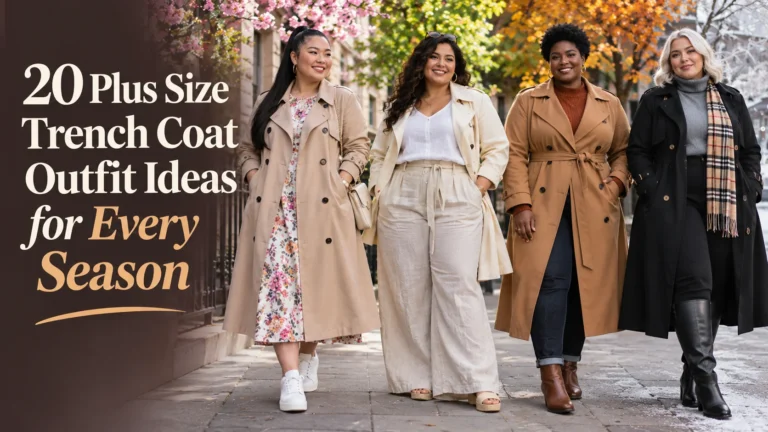
 20 Plus Size Trench Coat Outfit Ideas for Every Season→
 10 Plus Size Puffer Coat Outfit Ideas for Every Winter Occasion→
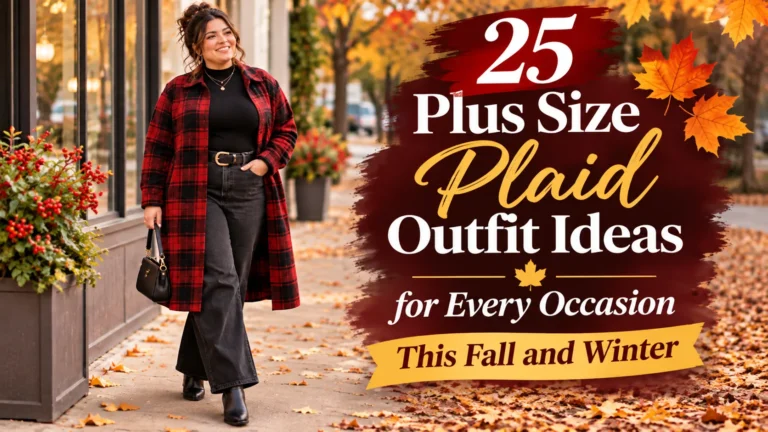
 Plus Size Plaid Outfit Ideas: 25 Stunning Looks for Every Occasion This Fall & Winter→
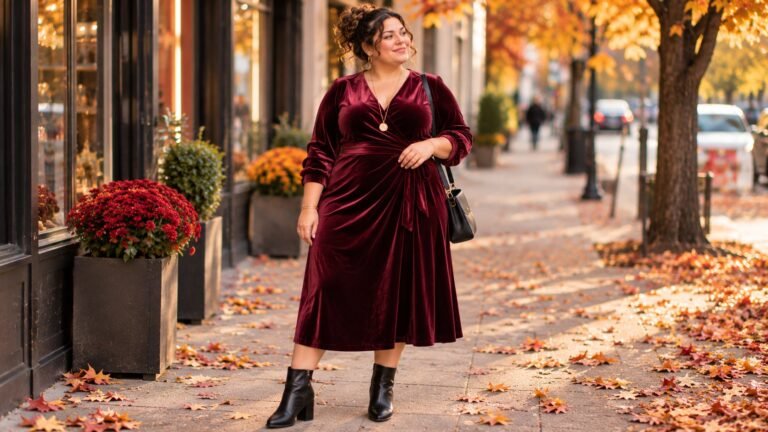
 Plus Size Velvet Outfits: Stunning Ideas for Fall & Winter→
 Plus Size Fall Outfits for Women Over 50→